
How to Search the Elbert County Court Docket
Start with the Colorado Judicial Branch Docket Search filtered to Elbert County, which is free. It shows upcoming hearings on the public calendar. What it will not give you is every filing in a case file. Bring a case number if you have one. Searching by name works, though a common name can clutter the results, since one case repeats for each party shown. Keep the location locked on Elbert County throughout.
No single channel covers everything. CoCourts offers eligible statewide case-history access. For documents, older records, certified copies, or a case that never shows up online, contact the Combined Court clerk. Municipal ordinance matters sit apart from all of this. Check directly with Elizabeth, Kiowa, or Simla for those.
- Open the county-filtered docket and confirm Elbert County as the location.
- Choose a date range, or enter the four-digit year, case class, and sequence.
- Use an individual, business, or attorney search only when the number is unknown.
- Match the case number, then read the hearing type, appearance type, time, and courtroom.
- Recheck near the setting and ask the clerk for a filing or certified copy when needed.
Elbert County Docket Search Fields
The Elbert County court docket search accepts a hearing date, a case number, a party name, or an attorney. A date query suits a setting coming up soon. Case mode asks for the year, a class letter such as CR or T, then the rest of the sequence. Party mode works differently for individuals and businesses, so pick the right type before you run the lookup.
| Field | Use | Local Detail |
|---|---|---|
| Location | Limits the calendar | Select Elbert County |
| Date Range | Finds scheduled events | Today through six months, or a specific date |
| Case Number | Targets one file | Year, class, and sequence |
| Party | Finds an unknown number | Individual or business mode |
| Attorney | Finds counsel calendars | Name or bar number |
You can print or export the results for your records. That does not freeze anything. A later order or reset can replace the listed court date, so confirm before you rely on it.
What a Court Docket Shows
Think of a free Elbert County court docket hit as one row on a calendar. It tells you when an event is set and in what manner. It does not carry the complaint or the motions. Charge detail, bond terms, and judgment text are missing too. So is any document image. Those live in the case history or the court file itself. Knowing the difference keeps a calendar entry from posing as the full record.
| Case Number | A year, class, and sequence such as 2026-CR-00123. |
|---|---|
| Name | A displayed party name that may repeat across rows for one case. |
| Hearing | The event label, including arraignment, pretrial, motions, sentencing, or return date. |
| Setting | Date, time, duration, location, appearance type, and courtroom. |
| Not Shown | Filed pleadings, full charge detail, balances, and signed orders. |
For the substance of any ruling, look to the signed order. The calendar only proves that an event was scheduled or that it happened.
Elbert County Docket Codes
Case-class letters tell you which side of the Combined Court holds the file. They also sort a traffic matter from a felony. A civil suit and a domestic case get their own marks too. When you call the clerk, copy every part of the case number exactly, leading zeros included. One dropped zero can stall the whole docket search.
- CR
- District Court criminal case, generally a felony matter.
- M and T
- County Court misdemeanor and state traffic case classes.
- CV and C
- District civil and County Court civil case classes.
- DR
- Domestic-relations case class.
- JV
- Juvenile case class with restricted public access.
More classes exist in the statewide list. If a code is unfamiliar, repeat it to the clerk verbatim rather than guessing at what it expands to.
Which Courts Keep Dockets
Elbert County Combined Court in Kiowa houses both the District Court and the County Court. Treat them as separate trial jurisdictions, not rungs on one appeal ladder. Each municipal court keeps its own town cases. The agency that issued the charge points the way. So do the case class and the citation heading.
| Court | Docket Covers | Where to Search |
|---|---|---|
| Elbert District Court, Division 1 | Felony, larger civil, domestic, juvenile, and probate | State docket, CoCourts, or Combined Court clerk |
| Elbert County Court, Division A | Misdemeanor, state traffic, small claims, and limited civil | Same state and clerk channels |
| Municipal Courts | Town ordinance and municipal traffic matters | Elizabeth, Kiowa, or Simla court clerk |
Colorado splits appeal routes. Many trial-court appeals land at the Colorado Court of Appeals, yet some County Court appeals head to District Court first, and a few cases follow a different statutory path.
Elbert County's problem-solving dockets add another wrinkle. The 23rd District lists Veterans Court, Recovery Court, Wellness Court, and Sobriety Court as district programs. No separate public Kiowa calendar exists for each one. A participant's case can stay under the original criminal case number. The same public-access limits apply to that case. So search that underlying case number in the Elbert County court docket rather than hunting for a standalone specialty docket. When in doubt, ask the Combined Court clerk which channel covers the program.
Elbert County Joined the 23rd District
On January 14, 2025, Elbert County left the old 18th Judicial District and entered the new 23rd. Douglas and Lincoln counties made the same move. Arapahoe stayed in the 18th. So an older filing may carry an 18th District label even though the current Elbert County court docket now runs under the 23rd.
The Judicial Branch announcement about the new district and its chief judge records that transition. Routine Elbert filings never left Kiowa.
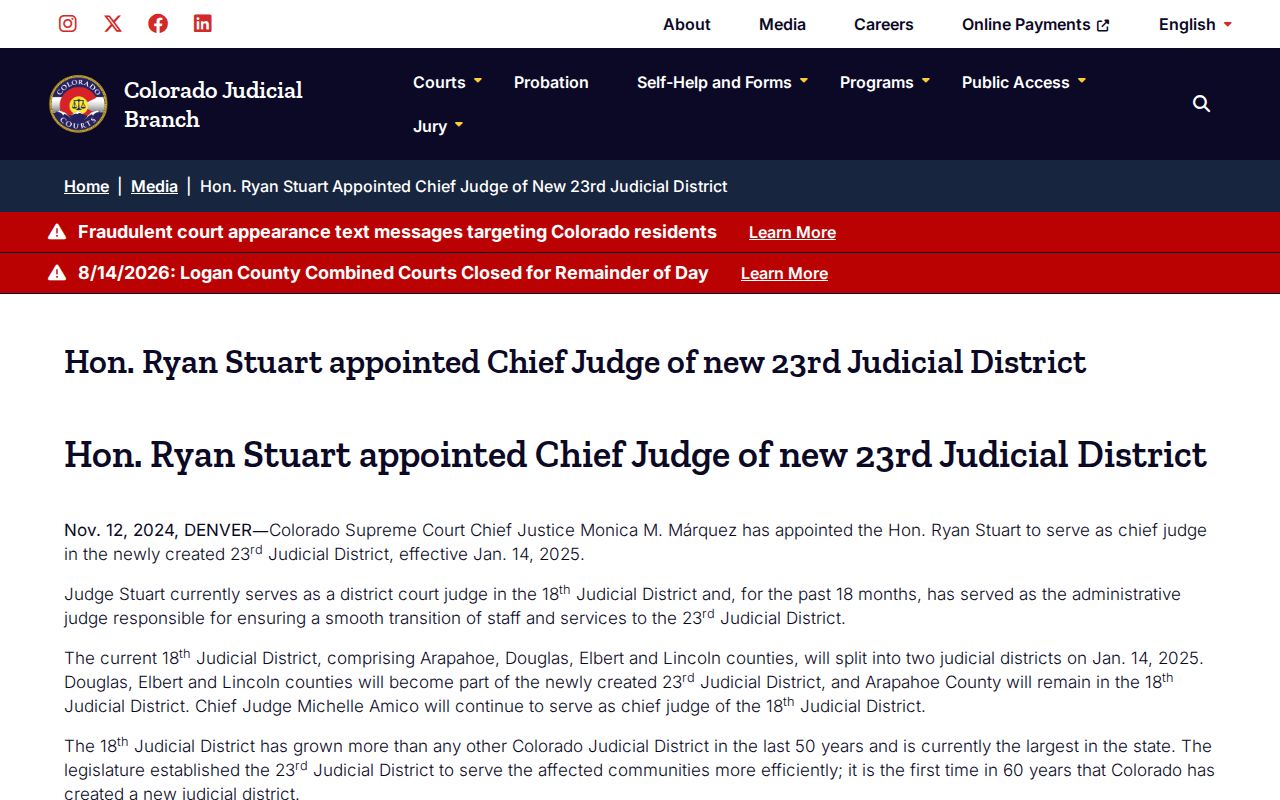
The shift explains a small puzzle. An older record's district number can differ from the one the court uses today.
The official 23rd Judicial District overview adds scale. Its totals are district-wide rather than Elbert-only. It reports 35,989 new District and County Court cases in fiscal year 2025 across Douglas, Elbert, and Lincoln counties. Twenty judicial officers serve the three counties. The group includes nine District judges, five County judges, and six magistrates. Elbert itself seats one District judge and one part-time County Court judge. Those figures describe shared administration and workload. Elbert's own filing count is missing from them. They also ignore how the local docket split among criminal, civil, traffic, domestic, probate, and juvenile classes.
The same caution applies to the district's reported 249 trials, 96 of them before juries. Useful context, yes. A local filing count, no. Population adds one more angle: Elbert County spans 1,851 square miles and grew from 26,062 residents in the 2020 Census to an estimated 30,534 on July 1, 2025. Growth alone does not prove filings rose. The district publishes no Elbert-only filing table, so treat any local filing claim with care.
Finding Court Dates and Settings
Check the full case number first. A docket date means nothing until the numbers match end to end. Once they do, note the hearing type along with the time and courtroom. The Elbert County court docket lists how you appear. Options include in person, virtual, by telephone, or with no appearance required. Each label covers only that one setting. Watching a public livestream never counts as an authorized appearance.
Continuances complicate things. A reset keeps the old date sitting in the case history while a newer setting takes control. So recheck the Elbert County court calendar after any continuance. Weigh it against the newest signed order. If the two disagree, call the Combined Court clerk. Weather and emergency notices can also override the web calendar.
One more caution. Weekend bond hearings are advertised for Saturdays. Yet two official pages have shown different afternoon times. Trust the individual case setting, and confirm with the clerk.
Elbert County Court Docket Offices
Who sits where? The official Elbert judges and staff page answers that. It lists one resident District Court judge, a part-time County Court judge, and the Clerk of Court. Those roles help you match Division 1, Division A, and the staff office holding the file. The page shows the current bench and clerk staffing for the Combined Court.
For court roles, the staff directory beats the county's pages about elected recording offices.
The 23rd District layers on shared administration. It also adds family-court facilitation, self-help services, interpreter coordination, and problem-solving programs. A district-wide program does not guarantee a separate Elbert-only calendar. Entries may stay under the original case number.
Public Access to Dockets
Colorado governs court case records through Judicial Branch access rules. The Colorado Open Records Act covers many administrative records. Yet it is not the main route for requesting a filed court pleading. Start with the public calendar data, then ask the court clerk for the document itself. Remember that remote access can be narrower than a lawful inspection at the counter.
Key Rules:
CJD 05-01 sets access categories, exclusions, fees, and correction procedures for court records.
Colorado Open Records Act, sections 24-72-200.1 through 24-72-206 governs many public administrative records.
Colorado Title 19 gives juvenile records and identifying information added protection.
Not everything appears. Sealed, suppressed, juvenile, protected probate, and confidential-content records may be missing or limited. The request form may demand government-issued photo identification in some of those matters.
CJD 05-01 helps explain a common gap. A counter review can reveal a public item that remote access omits. Free-text fields get tighter treatment. So do victim or witness data, contact details, and protected financial information. Access to a public case does not put every field or image on the internet.
Elbert County Case Search Channels
Three channels, three jobs. The free Judicial Docket Search is built for hearings. CoCourts offers a broader statewide case-history route for eligible cases, while Colorado Courts E-Filing, also called ICCES, is a filing platform rather than an anonymous public reading room.
| Channel | Best Use | Limit |
|---|---|---|
| Judicial Docket Search | Free dates and settings | Not a full register or file |
| CoCourts | Eligible statewide case history | Vendor access and live price terms |
| ICCES | Authorized filing in permitted cases | Not general public docket access |
| Combined Court clerk | Documents, certification, and missing files | Fees and access rules apply |
A blank result is not a closed case. It may simply mean no hearing falls in the chosen range. Widen the dates, verify the class and number, check municipal court, and call the clerk before concluding anything.
The Clerk and Docket Records
The Clerk of Court at Elbert County Combined Court keeps both District and County Court files. From that one office you can get a docket or case history, a named filed document, or a certified copy. Requests can start online, at the counter, by telephone, or by mail once payment and delivery terms are settled. Faxes are not accepted.
For hours, contacts, and current operations, the official Elbert Combined Court page is the controlling source. It lists the court's own notices and service details.
The county courthouse page routes its docket searches, records requests, public notices, and virtual courtrooms through the same local clerk.
Clerk of Court, Elbert County Combined Court
751 Ute Avenue
Kiowa, CO 80117
Mail: P.O. Box 232
303-621-2131
Monday through Friday, 8:00 a.m. to 4:00 p.m.
Two Elbert County Clerk Offices
Don't confuse the two clerks. The court clerk and the elected Elbert County Clerk and Recorder are separate offices. Each has separate jobs. The court clerk at 751 Ute Avenue maintains the case files. The Clerk and Recorder at 440 Comanche Street records land instruments. It also runs elections, vehicles, and other county functions; that office's own page sends divorce questions back to the court clerk.
The split matters most mid-search. A hunt for a judgment lien or recorded instrument can turn into a hunt for the court judgment behind it. The recorder may hold the recorded item, but only the court clerk can supply and certify the court file. Calling the wrong counter costs time even though both offices sit in Kiowa.
District-level help exists too. The 23rd Judicial District court executive contact page documents the district administration. That administration backs the Elbert docket.
District administration stands apart from both the case-file counter and the county recording office.
Elbert County Court Record Requests
Start with the Judicial Branch Record and Document Request Form. Fill in your contact information. Mark Elbert County. Give the case number or caption plus a plain description of what you want. Say which format you need: plain electronic copy, paper copy, certified copy, or another available form. Absent unusual circumstances, the court aims to respond within three business days.
Expect fees. Statewide published estimates put pages at twenty-five cents each. A name search runs five dollars. Certified or exemplified copies run twenty dollars per document. Research or redaction beyond the first hour runs thirty dollars per hour. Off-site retrieval is billed at actual cost. The clerk verifies the final amount and any waiver before you pay.
Very old files may sit at Colorado State Archives instead. When you write to them, include the county, court, rough year, case number, and record type.
Transcripts work differently. The reporter or transcriber produces the verbatim hearing record; the clerk handles docket sheets and filed documents. Colorado's transcript request form wants the case number. It also asks for Elbert County, division or courtroom, judicial officer, event date, and delivery speed. Rates shift depending on whether you choose ordinary, expedited, overnight, or court-approved hourly delivery. Ask the Combined Court clerk which reporter covered the proceeding before you submit.
Exhibits follow their own access rules too. A public docket entry may show an exhibit was offered or admitted. Yet the exhibit itself may not be available remotely. Protected material and sealed portions can require judicial authorization. Name the exact event and document so the clerk can route the request, rather than treating a broad case search as a demand for everything.
Court Dockets by City in Elbert County
Elbert County contains three incorporated municipalities, according to 2020 Census place data. Elizabeth, Kiowa, and Simla each run their own channels. Those channels handle town ordinance and municipal traffic matters. Check your ticket. The court or issuing agency printed on it tells you where to route it. State felony, misdemeanor, traffic, civil, domestic, probate, and juvenile cases all belong elsewhere. They sit in the appropriate court in Kiowa instead. The Census incorporated-place data source backs this municipal list. It also keeps unincorporated communities from being mistaken for city courts.
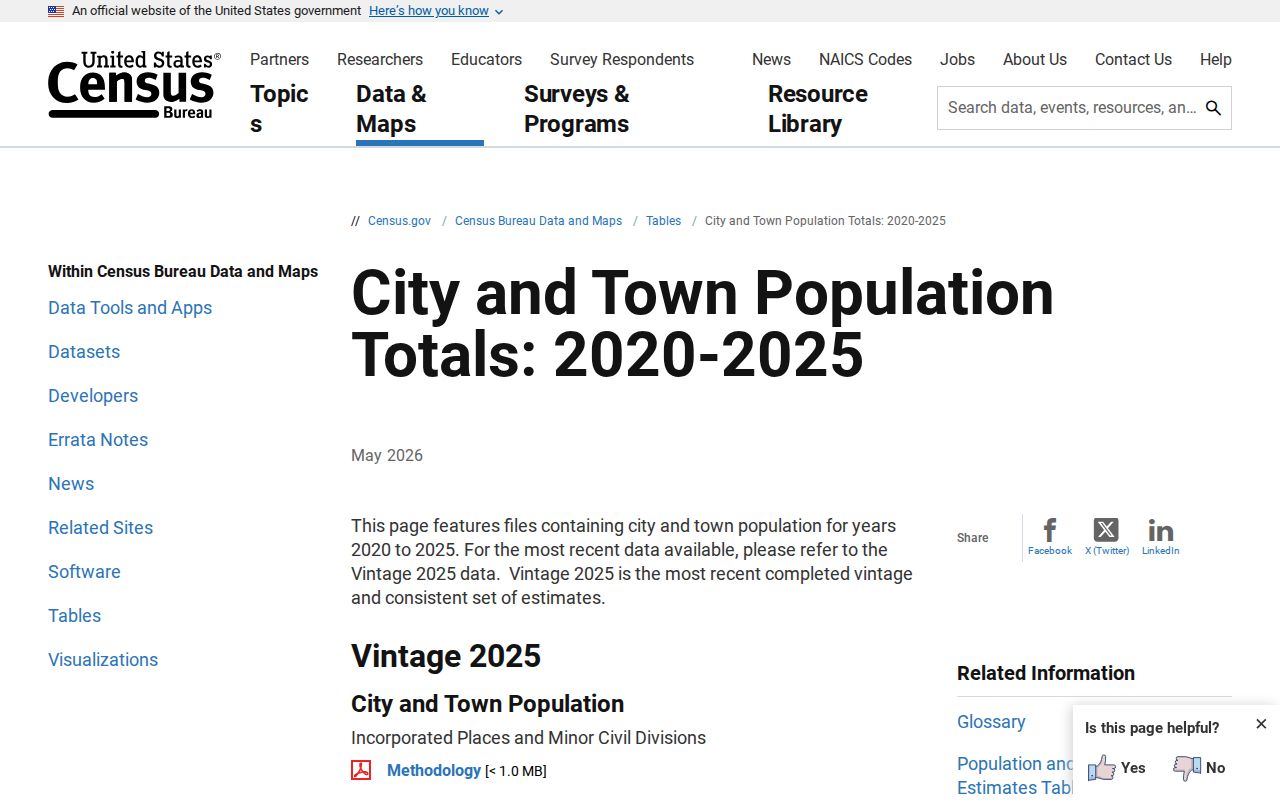
Population rank never decides which court holds a case. Jurisdiction and the issuing authority do.
Elizabeth Court Docket
2020 population 1,675. Town ordinance and municipal traffic cases begin with Elizabeth Municipal Court.
Kiowa Court Docket
2020 population 725. Municipal court is distinct from the nearby state Combined Court.
Simla Court Docket
2020 population 601. Simla publishes special appearance rules for municipal matters.
Map and Directions to the Elbert County Courthouse
District Court and County Court case files are kept at the Elbert County Courthouse, home to the Elbert County Combined Court, at 751 Ute Avenue in Kiowa. The Clerk of Court's counter here handles docket questions, document requests, and certified copies for state court cases. It is a separate address and a separate office from the elected Elbert County Clerk and Recorder at 440 Comanche Street, which records deeds and other instruments but is not the court-file custodian.
Elbert County Combined Court
751 Ute Avenue
Kiowa, CO 80117
303-621-2131
Monday through Friday, 8:00 a.m. to 4:00 p.m.
The court's published material does not describe parking, security screening, or a public-access terminal, so calling 303-621-2131 ahead of a visit is the safer plan. The clerk does not accept faxed documents, and mail should go to P.O. Box 232 rather than the street address.