
How to Search Criminal Dockets
Start with the official Colorado Judicial Branch Docket Search for Elbert County when you need a current criminal hearing. Set the Location field to Elbert County first. If you know the file, its four-digit year, case class, and sequence will pull it up. Name searches work for individuals or businesses, and attorney searches take a name or bar number. Remember the tool is a calendar. It tells you when and how a hearing will occur, nothing more.
Bring the full case number whenever you can. A CR prefix marks a District Court criminal file. An M prefix marks a County Court misdemeanor file. Search by name only when the number is unknown, and match the case number to a row before trusting it, since one displayed name can generate several rows for the same case. From here, the remaining steps walk through every documented access channel: online search, case history, the counter, mail, telephone, and a formal document request.
- Open the county-filtered state search and confirm Elbert County. Narrow Court Type to District for a CR felony or County for an M misdemeanor when known.
- Enter the year, class, and sequence exactly as printed. If using a name, choose the proper party mode and compare every matching case number.
- Read the hearing type, date, time, appearance type, and courtroom. Recheck near the setting because a reset can add a later controlling entry.
- Use CoCourts for eligible statewide case history. Do not treat Colorado Courts E-Filing as an anonymous public browsing portal.
- For a filing, disposition order, or certified record, use the Judicial Branch request form or contact the Combined Court clerk at the counter, by mail, or by telephone.
Elbert Criminal Dockets: CR or M
Two criminal case classes dominate the state trial courts here. A 2026CR123 number signals a District Court criminal matter, usually a felony. A 2026M123 number signals a County Court misdemeanor. One clerk keeps both. The Clerk of Court at Elbert County Combined Court holds the files, but you still have to set the Court Type filter to match the one you want.
| Case class | Elbert court | Typical scope |
|---|---|---|
| CR | District Court, Division 1 | Felony criminal cases |
| M | County Court, Division A | Misdemeanors and state petty offenses |
| Municipal | Elizabeth, Kiowa, or Simla court | Town ordinance and municipal traffic cases |
A town citation may never show up as an M or CR case. Check the court named on the citation first. Only use the state route if a separate state case, a transfer, or an appeal actually creates an Elbert County criminal docket.
What a Criminal Docket Shows
A full Elbert County criminal case history carries real weight. It lists the header, the People of Colorado as prosecutor, party and counsel roles, and charge information. Dated events, settings, and a disposition appear too. The free calendar shows far less. Hearing logistics appear. The charge statute, bond terms, plea, sentence, balance, and filing images do not. Read each field for exactly what it says.
| Case Number | The year, class, and sequence, such as 2026CR123; retain leading zeros when they appear. |
|---|---|
| Charge | Offense, statute, count, and classification when public in the case history, not in the basic calendar row. |
| Hearing Setting | Date, time, duration, hearing type, appearance type, location, and courtroom. |
| Plea and Orders | Formal plea and later signed rulings; a setting label alone does not establish either one. |
| Disposition | Dismissal, conviction, deferred judgment, acquittal, sentence, revocation, or appeal as the actual entry states. |
Calendar rows can repeat, since the name field may generate one row per party. So count and compare by case number, not by row. If the fact you need is missing, move to case history or request the filed document instead of guessing.
Elbert Criminal Calendar Limits
The Elbert County criminal docket calendar answers one question well: when is something happening? It lists arraignments, preliminary hearings, motions hearings, pretrial conferences, and sentencing hearings. It does not carry the rest of the file. Charge statutes are missing from the basic result. Bond amounts, sentence language, and document images are missing too. That gap matters when you need to know what a judge actually ordered.
For case history, CoCourts offers eligible access. To see the signed order, the complaint, the information, or the sentence itself, file the Judicial Branch Record/Document Request Form. Name the case and the document you want. Remember that a portal printout is not a certified record. Authentication only comes from the Combined Court clerk.
Note: A hearing title on the Elbert County criminal docket marks a scheduled stage. It is not the final outcome of the case.
Stages on a Criminal Docket
Read an Elbert County criminal docket in date order. The record begins with a complaint or information, then advisement and arraignment follow. Motions and pretrial settings track what must be resolved before plea or trial. Later, a judgment, sentence, dismissal, or appeal records the next legal step. One quirk deserves attention. An early setting can stay visible after the matter is reset. So the newest signed order and the active setting control.
Docket flow: Filing › Arraignment › Pretrial › Plea or Trial › Disposition › Sentencing
A motion is only a request. Granting relief is never implied by the entry. A charge, likewise, is an accusation rather than a conviction. Follow the chronology through the disposition entry and the signed order to learn the real outcome.
Elbert Criminal Docket Setting Labels
Local search results use short labels describing each hearing's purpose. Knowing their plain meaning keeps a reader from treating every date as a trial or an outcome.
- Return Filing of Charges
- A prosecution filing or status return, sometimes shortened in the result.
- Preliminary Hearing
- A probable-cause stage in an eligible criminal case.
- Arraignment
- The formal setting where charges and plea are addressed.
- PreTrial Conference
- A case-management and readiness setting before trial.
- Sentencing Hearing
- The setting where sentence is imposed or addressed after disposition.
Appearance Type matters just as much. In person, virtual, telephone, and no appearance required carry different instructions. Watching a public livestream does not count as appearing, and remote attendance must be authorized for the specific Elbert County criminal docket setting.
Which Court Holds Criminal Dockets
Elbert District Court holds the felony dockets. Elbert County Court handles misdemeanor and state petty-offense dockets. Both operate from Elbert County Combined Court in Kiowa, and the unified Judicial Branch clerk keeps both files, unlike states that elect separate civil and criminal clerks.
Elizabeth, Kiowa, and Simla run separate municipal channels for town ordinance matters. The elected Elbert County Clerk and Recorder is a different office too, handling recorded instruments, elections, and motor vehicle work rather than any District or County Court criminal case file. A docket request sent there only delays the search.
Elbert Criminal Docket Bond Hearings
Two official sources give slightly different times for weekend bond hearings in Elbert County. The Combined Court calendar lists them Saturdays at 2:00 p.m. A virtual-room listing posts 2:30 p.m. instead. Trust the setting on your own case. Let the clerk settle any conflict before you rely on one time or the other.
Find your row on the Elbert County criminal docket by case number. Note the appearance type and courtroom. The online entry and a mailed notice can disagree. If they do, call the Elbert Combined Court clerk at 303-621-2131. Watching a public stream never replaces an ordered appearance.
Elbert Criminal Docket Signed Orders
A signed sentencing order holds detail the docket calendar simply lacks. Start with the case number and the event date. Then fill out the official Record/Document Request Form, pick Elbert County, and name the exact order you need. Say whether you want a plain electronic copy or a certified one.
Plan on a response within three business days, barring unusual delays. Old files stored off-site can run longer. Suppressed or protected files may call for government-issued identification, and your legal eligibility still governs what you may see. Take counter requests to 751 Ute Avenue in Kiowa during regular clerk hours, or mail them to P.O. Box 232 once payment and return terms are set. The phone number is 303-621-2131. No faxes; Elbert Combined Court will not accept them.
Elbert Criminal Docket Missing Results
A blank docket search does not mean no case exists. The Elbert County criminal docket tool tracks hearings. A file with nothing scheduled in your date range may never surface. Other culprits: a different name spelling, a wrong CR or M class, suppression, an off-site older file, or municipal court jurisdiction.
Check the full case number first. Widen the range and switch party modes. Then call the Combined Court clerk, or the municipal clerk named on the citation. Ask whether the file is suppressed and what lawful proof opens it. Staff will not bypass a seal, so do not ask.
Public Access and Sealed Criminal Dockets
Elbert County criminal docket information is public by default. A law, rule, or court order can restrict it. Under CJD 05-01, remote users may see primary party names, the case number, judge, county, hearing logistics, charges, pleas, findings, sentences, orders, and the filed-document list when no exclusion applies. Free-text searches, contact details, victim and witness data, and detailed financial screens face tighter limits.
Key Rules:
CJD 05-01, Access to Court Records sets Colorado's court-record access categories, exclusions, fees, and correction process.
C.R.S. §§24-72-301 through 24-72-309 govern criminal-justice agency records, which are distinct from the court case file.
Colorado Title 19 gives juvenile records and identifying information heightened protection.
A sealed or suppressed case may drop out of remote results or show only a sliver of data. Confirm the case number and court, widen the date range, check the right municipal court, and ask the clerk what proof or order is required. Never read a blank search as a dismissal.
Elbert Criminal Docket Access Directives
The Colorado Judicial Branch maintains a Chief Justice Directives index that includes the access directive governing both remote and courthouse review of Elbert County court records.
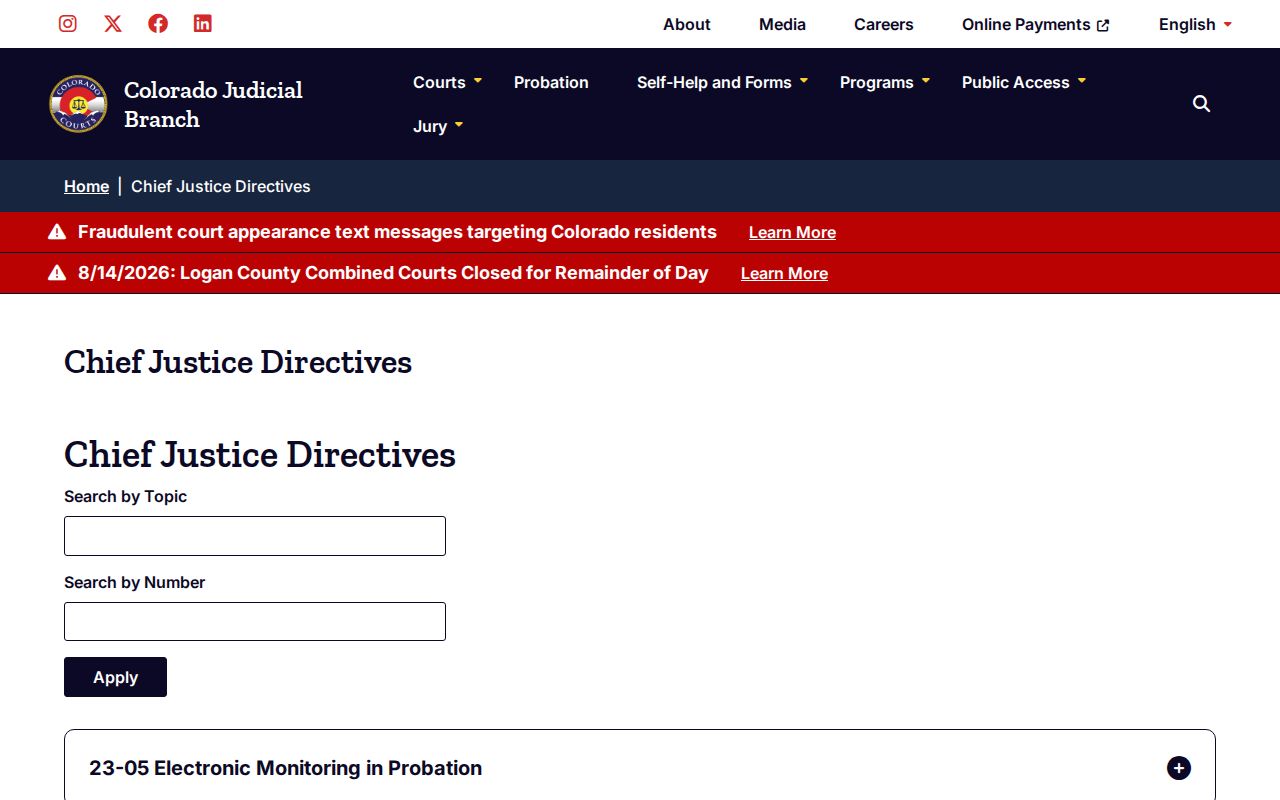
That directive explains the split you will see in an Elbert County criminal docket. Core case data appears online. Protected details stay behind stricter conditions.
Elbert Criminal Docket Appeal Path
An appeal creates its own dated docket events: notice of appeal, record transmission, mandate, stay, remand. Most Elbert state criminal appeals climb Colorado's appellate ladder, though some County Court appeals land in District Court under the governing statutes. Pull the trial number first and follow any cross-reference. The case did not vanish; it moved.
One caution on federal courts. The U.S. Court of Appeals for the Tenth Circuit handles federal matters, not ordinary Elbert state criminal cases. Its assigned manifest marks that boundary.
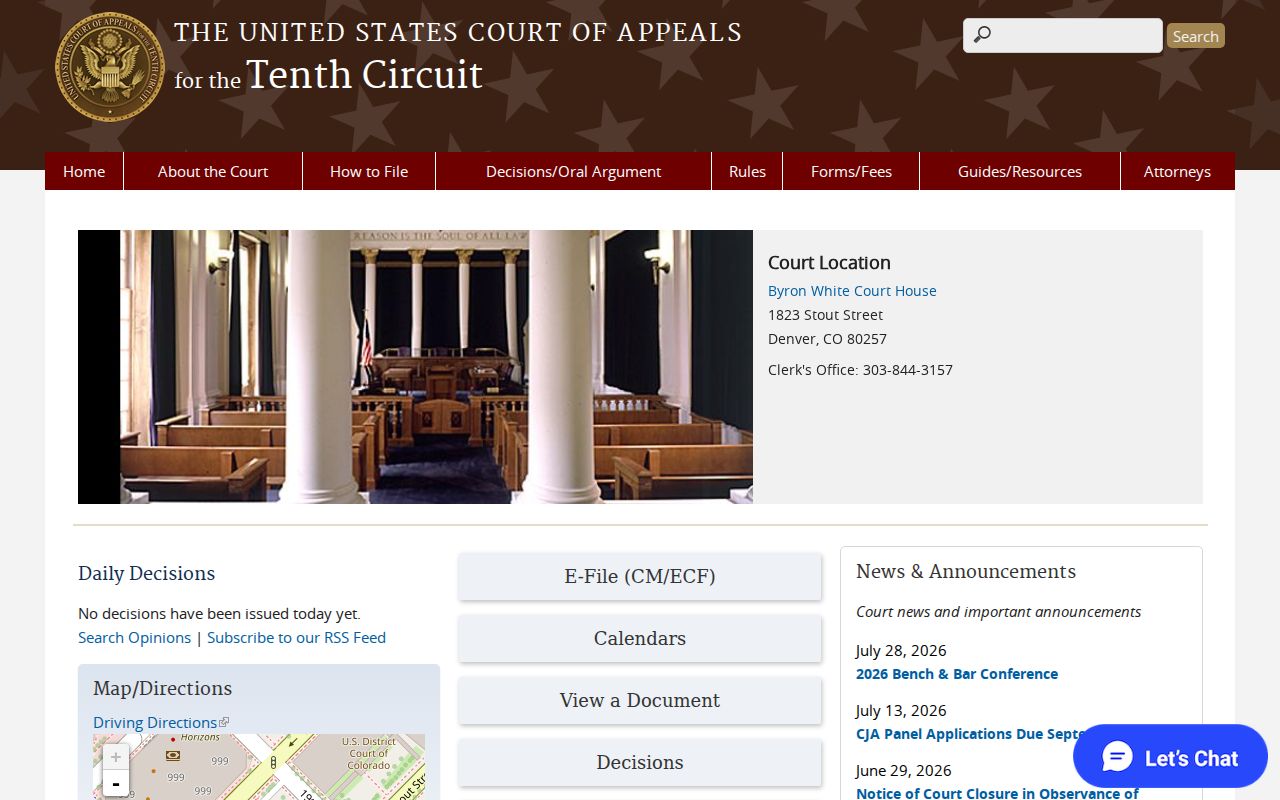
Reserve the Tenth Circuit for a federal criminal docket. A Colorado state trial appeal runs instead through the Colorado Court of Appeals, District Court where assigned, or the Colorado Supreme Court.